|







HOW WELL DO YOU
KNOW YOUR BABYSITTER?
MYTHS AND FACTS
ABOUT CHILD ABUSE
Arkansas Child
Welfare Practice Model

Arkansas Department
of Human Services
P.O. Box 1437, Slot S569
700 Main Street
Little Rock, AR 72203-1437
Division of Children and Family
Phone (501) 682-1001
Care * Commit * Connect
Together for Arkansas Families
|
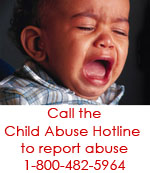 CHILD ABUSE AND NEGLECT CHILD ABUSE AND NEGLECT
CAN BE PREVENTED
Parents and caregivers who have support—from family, friends, neighbors, and
their communities—are more likely to provide safe and healthy homes for their
children. When parents lack this support or feel isolated, on the other hand,
they may be more likely to make poor decisions that can lead to neglect or
abuse.
Increasingly, concerned citizens and organizations are realizing that the
best way to prevent child abuse is to help parents develop the skills and
identify the resources they need to understand and meet their children's
emotional, physical, and developmental needs and protect their children from
harm.
The following protective factors have been linked to a lower incidence of
child abuse and neglect:
Nurturing and attachment. When
parents and children have strong, warm feelings for one another, children
develop trust that parents will provide what they need to thrive.
Knowledge of parenting and of child and youth development. Parents who
understand how children grow and develop can provide an environment where
children can live up to their potential.
Parental resilience. Parents who are emotionally resilient have a
positive attitude, creatively problem solve, effectively address challenges,
and are less likely to direct anger and frustration at their children.
Social connections. Trusted and caring family friends provide emotional
support to parents by offering encouragement and assistance in facing the
daily challenges of raising a family.
Concrete supports for parents. Parents need basic resources such as food,
clothing, housing, transportation, and access to essential services that
address family-specific needs (such as child care, health care, and mental
health services) to ensure the health and well-being of their children.
Information provided by:
Child Abuse and Neglect
www.childwelfare.gov/can/
For more
information on preventing child abuse, please contact your local DHS office
or email Shiloh Marlar at
shiloh.marlar@dhs.arkansas.gov
|
|
|
